Why do file extensions change? Causes, fixes & prevention

You rename a file, sync it to the cloud, or update an app, and suddenly it won’t open. The culprit is often a changed file extension. This happens more than most users expect, and the results range from mildly annoying to genuinely disruptive. Whether Windows is hiding the extension, an antivirus renamed the file, or iCloud quietly reset something during sync, the root causes are surprisingly varied. This guide walks you through what file extensions actually are, why they change, how Windows and Mac handle them differently, and exactly what to do when something goes wrong.
Table of Contents
- What are file extensions and why do they matter?
- How and why do file extensions change?
- How do Windows and Mac handle file extension changes differently?
- Troubleshooting and fixing unwanted file extension changes
- Why extension changes aren’t always a disaster—and what most guides miss
- Access expert file extension guides and troubleshooting help
- Frequently asked questions
Key Takeaways
| Point | Details |
|---|---|
| Extension changes explained | File extensions may change due to user edits, software actions, or system behaviors. |
| Windows vs. Mac differences | Windows and Mac handle file extensions, hiding, and changes in distinct ways with unique edge cases. |
| Troubleshooting steps matter | Identifying the cause of an extension change helps you fix and prevent future file issues easily. |
| Cloud and antivirus impact | Cloud syncing and security tools often alter extensions or their visibility, adding an extra troubleshooting layer. |
| Prevention is possible | Understanding and properly managing file extensions prevents most file access headaches. |
What are file extensions and why do they matter?
A file extension is the short suffix at the end of a filename, separated by a period. Think ".docx, .jpg, .mp3, or .pdf`. These few characters tell your operating system which program should open the file. Without them, your computer is essentially guessing.
Understanding what file extensions are is the foundation for diagnosing almost any file-opening problem. Here’s a quick look at common extensions and what they signal:
- .docx — Microsoft Word document, opened by Word or Google Docs
- .jpg / .png — Image files, opened by any photo viewer
- .mp3 — Audio file, opened by media players
- .pdf — Portable document, opened by Adobe Acrobat or a browser
- .zip — Compressed archive, extracted by built-in OS tools or apps like WinRAR
When an extension changes, even slightly, the operating system may try to open the file with the wrong program. A .docx renamed to .txt might open in Notepad instead of Word, showing raw XML code instead of your formatted document.
Important: Changing the extension in the filename does NOT change the actual file format. The data inside stays the same. Only the label changes, which means the OS may misread it.
Extensions also matter for security. Malicious files sometimes disguise themselves with misleading extensions, like a .exe pretending to be a .pdf. This is why operating systems and antivirus tools pay close attention to them. Misreading or ignoring an extension can expose you to real risk.
Finally, extensions affect user trust. When you receive a file and the extension doesn’t match what you expected, it raises a red flag. A report labeled invoice.exe instead of invoice.pdf should always make you pause.
How and why do file extensions change?
Now that you know why extensions matter, let’s explore exactly how and why these changes happen. There are more causes than most people realize, and they fall into a few clear categories.
- User edits during renaming. The most common cause. You right-click a file, choose Rename, and accidentally delete or alter the extension. Windows sometimes warns you, but not always.
- App behavior on save. Some applications change the format when you use Save As. Saving a
.txtfile in WordPad, for example, may default to.rtfwithout making it obvious. - OS default settings. Windows hides known file extensions by default, which means you might rename
photo.jpgthinking it’s just calledphoto, and end up withphoto.jpg.jpg. - Third-party software. Antivirus programs like Bitdefender can rename suspicious files, appending
.viror similar suffixes to prevent execution. This is intentional but can confuse users who don’t check the logs. - Cloud and sync services. iCloud sync can reset hide flags and alter extension visibility settings, particularly on Mac. Other services like Dropbox and OneDrive can also introduce unexpected changes during conflict resolution.
Pro Tip: Before renaming any file, make a copy first. It takes five seconds and saves you from a frustrating recovery process if something goes wrong.
Knowing the cause matters because the fix is different for each one. An accidental rename is easy to undo. A cloud service silently resetting your settings is much harder to catch. If you’re dealing with a stubborn problem, it helps to troubleshoot extension changes systematically rather than guessing.
How do Windows and Mac handle file extension changes differently?
These changes can look very different depending on your operating system. Windows and macOS have distinct default behaviors, and each has its own quirks that can trip you up.

Windows hides known file extensions by default in File Explorer. This means a file named report.docx just shows as report until you enable “Show file name extensions” in Folder Options. When you rename a file, Windows does show the extension, but it’s easy to delete it by accident.
macOS gives users control through Finder preferences. You can choose to show or hide extensions globally, or set it per file. However, there’s a known macOS edge case where Mac refuses to hide an extension if the filename itself ends with a string that matches a known extension. For example, a file named backup.old where .old is recognized may always display its extension regardless of your Finder settings.
Here’s a side-by-side comparison to help you identify extensions on Windows and Mac:
| Feature | Windows | macOS |
|---|---|---|
| Default extension visibility | Hidden for known types | Configurable in Finder |
| Rename warning | Yes, prompts on change | Yes, prompts on change |
| Cloud sync impact | OneDrive may alter names | iCloud can reset hide flags |
| Antivirus interference | Common (e.g., Bitdefender) | Less common but possible |
| Edge case behavior | Hidden chars in filenames | Filename ending in known ext |
Understanding file format differences between platforms helps explain why the same file can behave differently on each OS. A file that opens fine on Windows may show a different extension or refuse to open on Mac if the format isn’t natively supported.
- On Windows, hidden characters in filenames can sometimes interfere with how extensions are read.
- On Mac, iCloud Drive syncing can override local hide settings after every sync cycle.
- Antivirus tools on both platforms may flag and rename files without notifying the user immediately.
Troubleshooting and fixing unwanted file extension changes
With these technical differences and edge cases in mind, here’s how you can identify and fix extension-related problems. Work through these steps in order.
Step 1: Make extensions visible.
- Windows: Open File Explorer, click View, then check “File name extensions.”
- Mac: Open Finder, go to Preferences, click Advanced, and check “Show all filename extensions.”
Step 2: Check the actual extension. Right-click the file and choose Properties (Windows) or Get Info (Mac). Look at the full filename, including the suffix. Compare it to what the file should be.
Step 3: Rename carefully. If the extension is wrong, right-click and rename it. Type the correct extension at the end. Both Windows and Mac will warn you before confirming the change.
Step 4: Check your cloud service. iCloud sync resets hide flags repeatedly, which means your fix may undo itself after the next sync. If this is happening, try pausing iCloud sync temporarily or moving the file outside the synced folder.
Step 5: Review antivirus logs. If a file was renamed by security software, check the quarantine folder and logs. Most tools let you restore the original file or whitelist it.
Pro Tip: Use a file recovery tool or check your Recycle Bin before assuming a file is gone. Many “missing” files are just renamed or moved by background processes.
| Problem | Likely cause | Fix |
|---|---|---|
| File won’t open after rename | Extension changed accidentally | Rename with correct extension |
| Extension reappears after hiding | iCloud sync override | Pause sync or move file |
| File renamed to .vir or similar | Antivirus quarantine | Check AV logs and restore |
| Double extension (e.g., .jpg.jpg) | Hidden extension + rename | Remove duplicate suffix |
If none of these steps work, the file itself may be corrupted rather than just mislabeled. In that case, you’ll need to open extensions on Windows and Mac with a compatible application or use a dedicated file repair tool.
Why extension changes aren’t always a disaster—and what most guides miss
Most guides treat any file extension change as a crisis. That framing causes more panic than it prevents. Here’s the truth: renaming a file extension changes the label, not the data. A .jpg renamed to .txt is still an image file inside. Open it with an image viewer and it works fine.
The real risk comes when a conversion actually happens, meaning the file data itself is transformed. That occurs when you use Save As in an application and choose a different format, not when you rename in the file system.
Understanding the differences in file types is what separates users who panic from users who problem-solve. When you know that a .docx and a .doc are structurally different formats, not just different names, you make smarter decisions about how to handle them.
The mindset shift worth making: treat extension management as a basic digital literacy skill, not a scary technical topic. Check extensions before opening unfamiliar files. Keep extensions visible in your OS settings. And when something looks off, investigate before assuming the file is broken. Curiosity beats caution here.
Access expert file extension guides and troubleshooting help
File extension problems can feel like a dead end, but most of them have a clear solution once you know where to look. open-the-file.com is built specifically for moments like these.
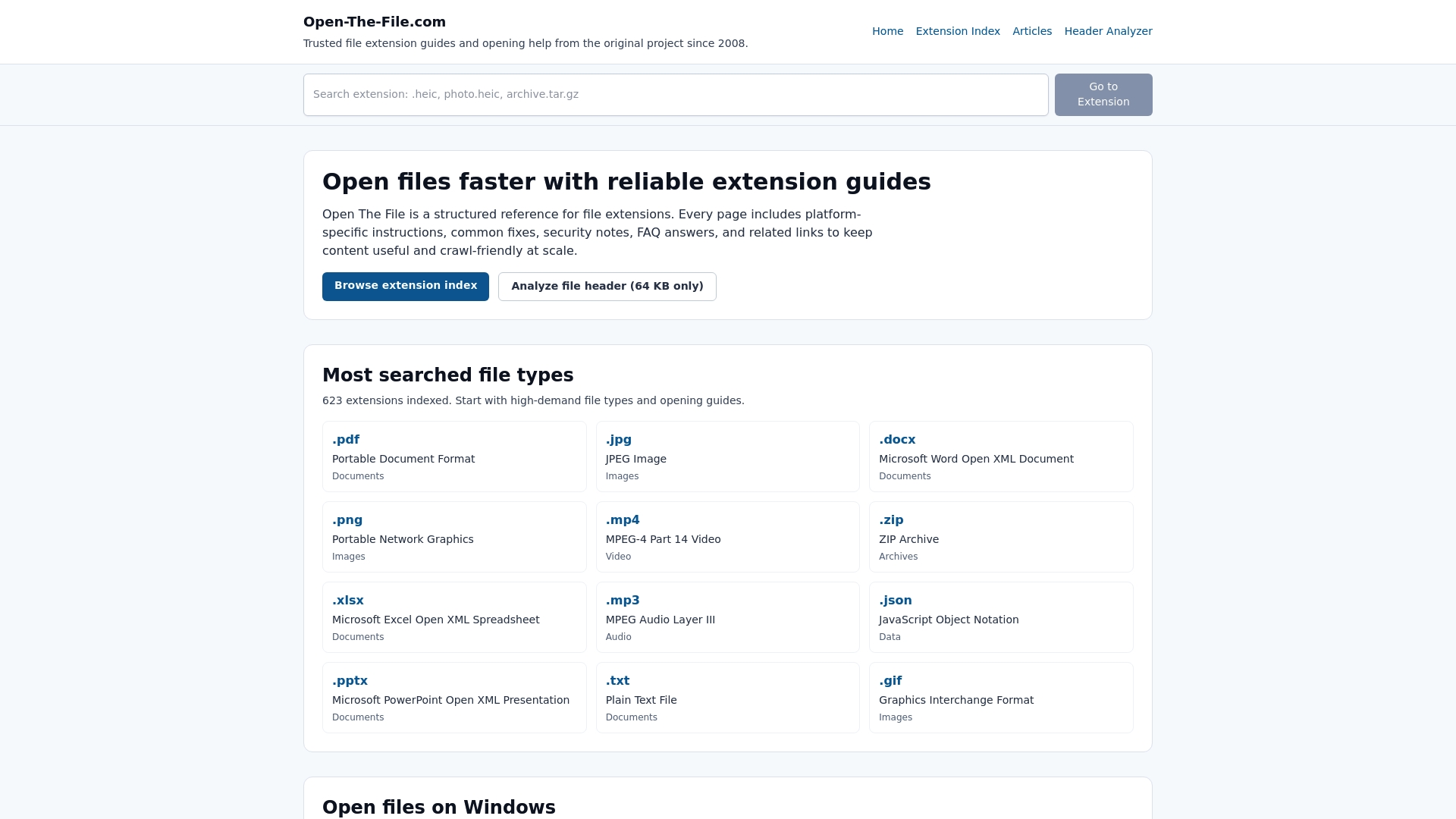
The site’s file extension directory covers 750+ file extension guides with step-by-step instructions for opening, converting, and troubleshooting each one on both Windows and Mac. Whether you’re dealing with a rare format you’ve never seen or a common file that suddenly won’t cooperate, the extension guides are written in plain language with no jargon. Think of it as your go-to reference whenever a file gives you trouble, with practical answers instead of confusing technical manuals.
Frequently asked questions
Can I safely change a file extension by renaming it?
Renaming a file only changes the label, not the actual format. To truly convert a file’s format, use the Save As or Export feature inside the appropriate application.
Why did my file extension change after syncing with iCloud?
iCloud and other cloud services can reset extension hide flags during sync cycles, especially on Mac, which can make extensions reappear or change visibility unexpectedly.
How can I make file extensions visible on both Windows and Mac?
On Windows, enable “File name extensions” in File Explorer’s View tab. On Mac, go to Finder Preferences and check “Show all filename extensions.” Both steps are covered in the extension identification guide.
What should I do if my antivirus changed a file extension?
Open your antivirus program and check the quarantine or logs section. Many tools like Bitdefender rename files to block execution, and most allow you to restore or whitelist the original file from within the app.
Recommended
- Types of file extensions: troubleshooting guide 2026 | Open-The-File.com
- What is a file extension? A 2026 guide for file management | Open-The-File.com
- File extension identification: steps for Windows & macOS | Open-The-File.com
- File format differences explained: IT pros guide 2026 | Open-The-File.com
- What causes DLL errors: common reasons and fixes in 2026 – FixDlls Blog