Image file format types explained: compatibility and uses
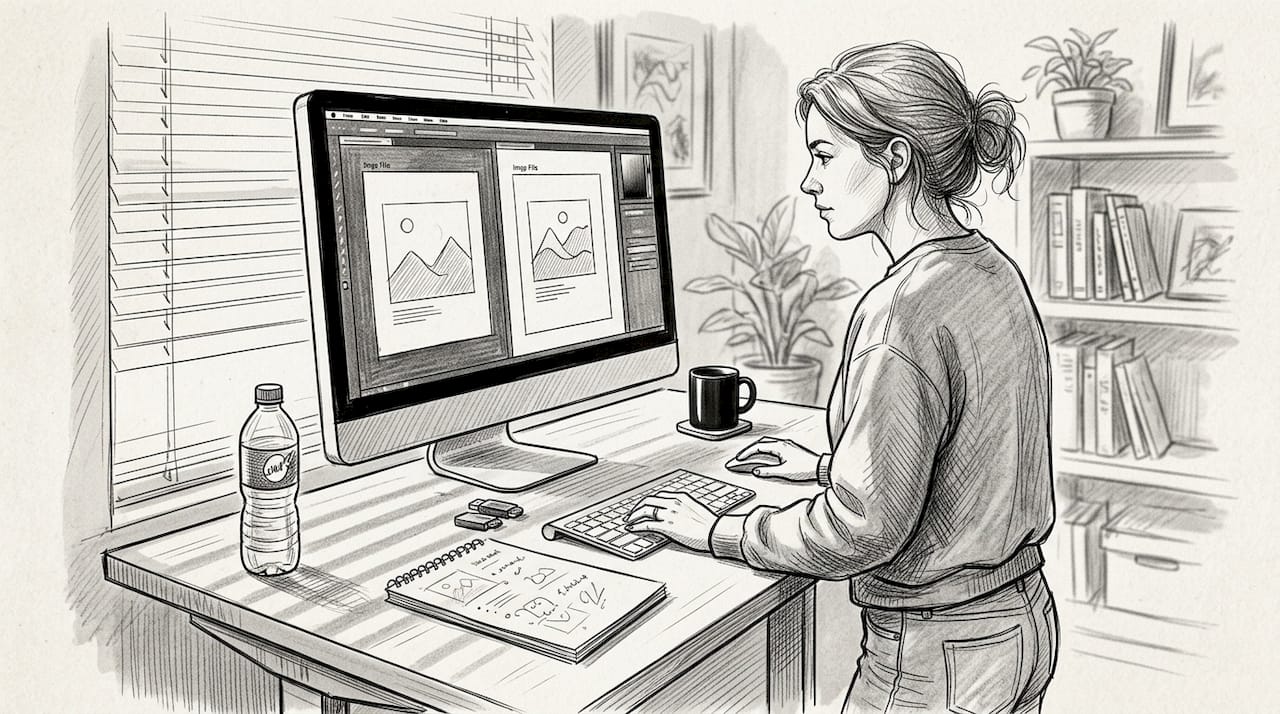
Choosing the wrong image file format can mean blurry prints, broken uploads, or a file your colleague simply cannot open. Whether you’re sharing vacation photos, designing a logo, or publishing images on a website, the format you pick controls quality, file size, and whether the image even displays correctly on another person’s device. JPEG uses lossy compression while PNG keeps every pixel intact with lossless compression, and GIF handles simple animations with a limited color palette. Understanding these differences is not just for tech experts. It’s a practical skill that saves time and prevents frustration for anyone working with images on Windows or Mac.
Table of Contents
- How to evaluate image file format types
- Core raster image file formats explained
- Vector formats: SVG, EPS, and beyond
- Software support: Which formats work where?
- How to choose the right format for your needs
- Easily open any image file format
- Frequently asked questions
Key Takeaways
| Point | Details |
|---|---|
| JPEG and PNG are universal | JPEG and PNG offer wide compatibility for most users and platforms. |
| Modern formats save space | WebP and AVIF provide smaller files with good visual quality for web and storage. |
| Vector for logos and print | SVG and EPS are ideal when you need infinite scalability without quality loss. |
| Software support matters | Always check your device or app’s supported formats before saving or sharing. |
| Format choice affects workflow | Understanding image formats streamlines sharing, editing, and printing tasks. |
How to evaluate image file format types
A file format is essentially a container that tells your software how to read and display image data. Think of it like a language: if your app doesn’t speak that language, it can’t open the file. Before picking a format, you need to weigh several factors.
Here are the main criteria to consider:
- Image quality: Does the format preserve fine detail, or does it sacrifice quality to shrink the file?
- File size: Smaller files load faster and take up less storage, but compression can hurt quality.
- Transparency support: Only certain formats (like PNG) allow transparent backgrounds.
- Animation: GIF and WebP support animation; JPEG does not.
- Color depth: Some formats support millions of colors; others cap at 256.
- Compatibility: Can the recipient’s software or operating system actually open the file?
The two most common compression types are lossy and lossless. Lossy compression (used by JPEG) permanently removes some image data to shrink the file. Lossless compression (used by PNG and TIFF) reduces file size without throwing away any data. For everyday sharing, JPEG and PNG offer the best cross-platform compatibility on Windows and Mac, while WebP and AVIF are better choices for web performance. Understanding the file type differences between these options helps you avoid common headaches like wrong colors or files that won’t open.
Pro Tip: Before sending an image to someone, ask what software they use. If you’re unsure, JPEG or PNG will open on almost any device without issues. You can also boost compatibility by converting to a more universal format before sharing.
Core raster image file formats explained
Raster images are built from a grid of tiny colored squares called pixels. Zoom in far enough and you’ll see them. Every photo you take with your phone is a raster image. The format determines how those pixels are stored and compressed.
Here’s a breakdown of the most common raster formats you’ll encounter:
- JPEG (.jpg, .jpeg): Lossy compression, excellent for photographs, very small file sizes, universally supported. Not ideal for text or graphics with sharp edges.
- PNG (.png): Lossless, supports transparency, great for logos, screenshots, and graphics. Larger files than JPEG.
- GIF (.gif): Supports simple animations, limited to 256 colors, best for small web graphics or memes.
- BMP (.bmp): Uncompressed, very large files, native to Windows. Rarely used for sharing.
- TIFF (.tiff): Lossless, extremely high quality, used in professional printing and scanning. Files can be massive.
- WebP (.webp): Modern format from Google, 25 to 35% smaller than JPEG at similar quality. Broad browser support.
- AVIF (.avif): Even newer, roughly 50% smaller than JPEG. Excellent quality but software support is still catching up.
- HEIF/HEIC (.heic): Apple’s default photo format since iOS 11. Efficient compression, but Windows users often need extra software to open it.
For common image file types used in everyday workflows, JPEG and PNG remain the most reliable. If you want to understand deeper file format differences between modern and legacy formats, it’s worth reviewing how each handles color data and compression before committing to one.
Vector formats: SVG, EPS, and beyond
Unlike raster images, vector graphics are not made of pixels. They use mathematical paths, points, and curves to define shapes. This means you can scale a vector image to any size, from a business card to a billboard, without any loss of quality.
“Raster images like JPEG and PNG lose quality when scaled up, while vector formats like SVG and EPS are infinitely scalable without any degradation.”
The two most common vector formats are SVG (Scalable Vector Graphics) and EPS (Encapsulated PostScript). SVG is the standard for web graphics, logos, and icons because browsers render it natively and it stays sharp on any screen resolution. EPS is older, rooted in the print and publishing industry, and is still used by professional designers working with legacy software.
| Feature | Raster (JPEG, PNG) | Vector (SVG, EPS) |
|---|---|---|
| Based on | Pixels | Mathematical paths |
| Scales without quality loss | No | Yes |
| Best for | Photos, detailed images | Logos, icons, illustrations |
| File size at large sizes | Very large | Stays small |
| Browser support | Universal | SVG yes, EPS limited |
For more practical file tips and guides on working with both raster and vector formats, you’ll find detailed walkthroughs that cover opening, converting, and troubleshooting each type.
Software support: Which formats work where?
Knowing a format exists is one thing. Knowing whether your software can actually open it is another. Compatibility gaps cause most of the “cannot open file” errors people run into daily.
On Windows, Microsoft Paint supports BMP, JPEG, PNG, GIF, and single-page TIFF natively. On Mac, Preview supports HEIC, JPEG, PNG, TIFF, PDF, and OpenEXR among others. Adobe Photoshop bridges most gaps, handling everything from legacy BMP to modern AVIF and HEIC.

| Format | Windows (Paint/Photos) | Mac (Preview) | Photoshop | Major Browsers |
|---|---|---|---|---|
| JPEG | Yes | Yes | Yes | Yes |
| PNG | Yes | Yes | Yes | Yes |
| GIF | Yes | Yes | Yes | Yes |
| BMP | Yes | Limited | Yes | Yes |
| TIFF | Partial | Yes | Yes | Limited |
| WebP | Yes (Photos) | Yes | Yes | Yes |
| AVIF | Limited | Partial | Yes | Yes |
| HEIC | Needs extension | Yes | Yes | Limited |
HEIC is Apple’s native format, so Windows users often need to install a codec or extension from the Microsoft Store to view these files. The AVIF format has strong browser support but older desktop apps may not recognize it yet. HEIC and HEIF support varies widely depending on your operating system version. Camera RAW file support is even more fragmented, since each camera manufacturer uses a slightly different RAW variant.
Pro Tip: If you receive a file you can’t open, check the file extension first. A quick search of that extension will tell you exactly which apps support it and whether you need a plugin or converter.
How to choose the right format for your needs
All the format knowledge in the world only helps if you can apply it quickly. Here’s a straightforward decision guide based on real use cases.
- Sharing photos with friends or colleagues: Use JPEG. It’s small, universally supported, and looks great for photographs.
- Designing graphics or logos with transparent backgrounds: Use PNG. It preserves sharp edges and supports full transparency.
- Publishing images on a website: Use WebP or AVIF for strong compression and modern browser support. Always keep a JPEG or PNG fallback for older browsers.
- Professional print work: Use TIFF or high-resolution PNG. Print shops expect lossless quality and high pixel density.
- Archiving original images: Use TIFF or your camera’s RAW format. These preserve every detail for future editing.
- Creating animations: GIF works for simple loops. For better quality and smaller sizes, consider animated WebP or APNG.
Modern formats like HEIC and AVIF excel in compression efficiency, but software support still varies. Apple devices favor HEIC, Windows defaults to JPEG and BMP, and Photoshop handles most formats across the board. If a file refuses to open, converting it to PNG or JPEG almost always solves the problem. You can convert for compatibility using free online tools or built-in OS features. For web publishing, optimizing images for web performance is a separate but equally important step once you’ve chosen the right format.
Pro Tip: When in doubt, export two versions: one in your preferred format for quality, and one in JPEG or PNG for sharing. This covers all your bases without extra effort.
Easily open any image file format
Even with a solid understanding of image formats, you’ll eventually run into a file that just won’t open. Maybe it’s an unfamiliar extension, a format your current software doesn’t support, or a compatibility issue between Windows and Mac. That’s exactly where open-the-file.com comes in.
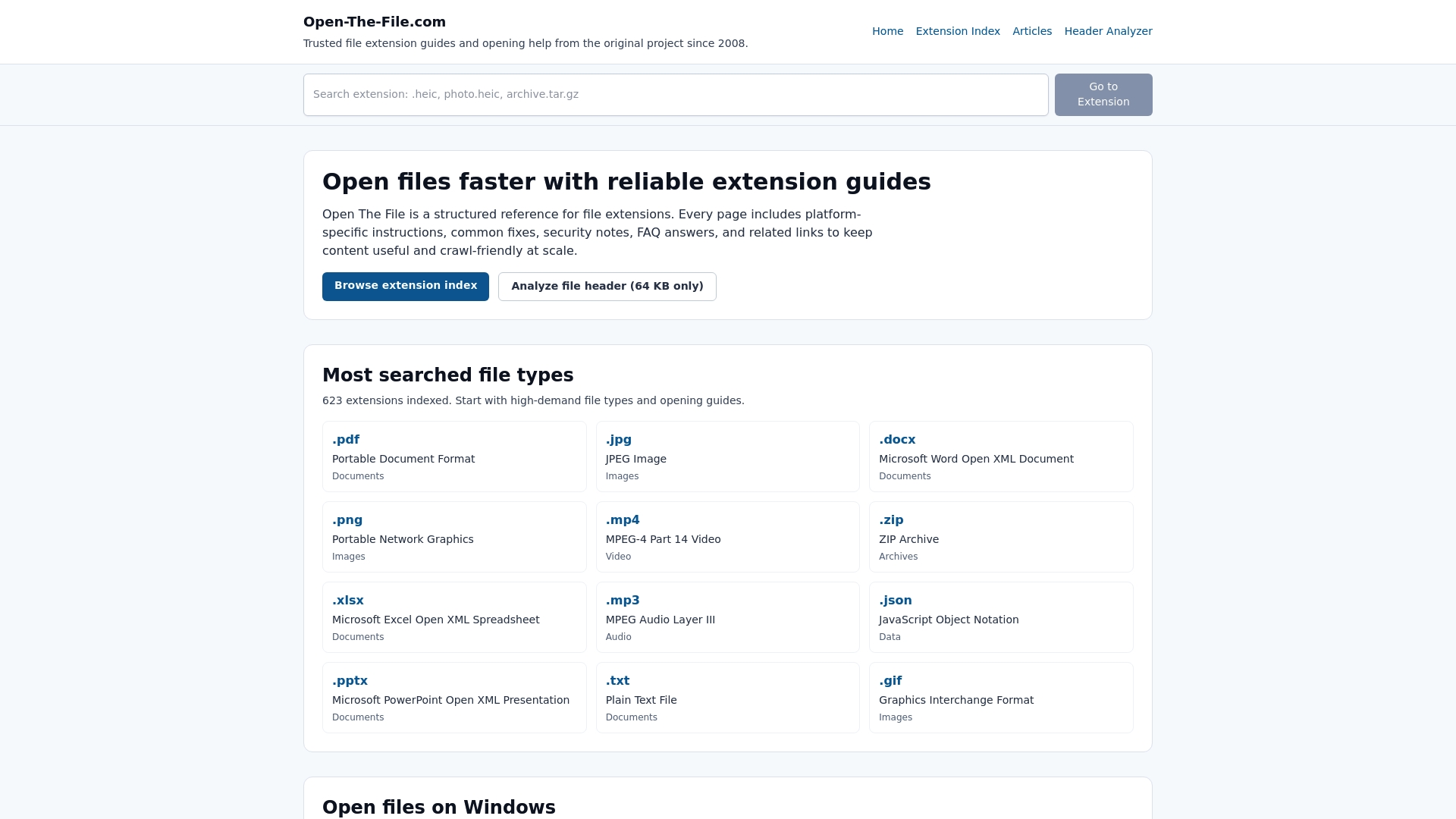
The site’s file extension index covers 750+ file extension guides, including every image type discussed in this article. Whether you’re dealing with a stubborn HEIC file, an AVIF image your browser won’t display, or a RAW photo from a new camera, you’ll find a dedicated guide with step-by-step instructions for both Windows and Mac. Head to open-the-file.com to search any extension and get clear, jargon-free guidance on opening, converting, or troubleshooting any image file you encounter.
Frequently asked questions
Which image file format should I use for highest compatibility?
JPEG and PNG are the safest choices for cross-platform compatibility on both Windows and Mac, opening reliably in virtually every image viewer and editor available.
Why can’t I open HEIC or AVIF images on my computer?
HEIC requires a codec extension on Windows since it’s native to Apple devices, and AVIF has broad browser support but older desktop software may not recognize it without an update or plugin.
What is the difference between raster and vector image formats?
Raster images are pixel-based and lose quality when scaled up, while vector formats like SVG use mathematical paths and remain perfectly sharp at any size.
How can I reduce image file size without losing much quality?
Switch to WebP or AVIF: WebP is 25 to 35% smaller than JPEG, and AVIF can be up to 50% smaller, both at comparable visual quality.
Which image file formats are best for print quality?
TIFF is the top choice for professional print and archival work, while high-resolution PNG also delivers crisp, clean results for graphics and illustrations.
Recommended
- Common image file types: how to choose and troubleshoot | Open-The-File.com
- Articles - File Tips & Guides | Open-The-File.com
- Differences in file types: a clear guide for all users | Open-The-File.com
- Why convert file formats: boost compatibility now | Open-The-File.com
- How to optimise images for web to boost performance | Kickass Online
- Alege formatul ideal pentru albumul foto perfect | Blog Albumelu